coinbizz

All stories of Bitcoin Cryptocurrency

  • Home
  • Bitcoin Markets
    • Bittrex
    • Poloniex
    • Bitfinexk
    • HitBTC
    • OKEx
    • itBit
    • Cryptopia
    • YoBit
    • Bithumb
  • Bitcoin Calculator
    • Ethereum Calculator
    • Child Category 2
    • Child Category 3
    • Child Category 4
  • Home
  • Bitcoin info
    • Mining
    • Mining Hardware
    • Easy Pool
    • Dvd
    • Games
    • Software
      • Office

Wednesday, May 16, 2018

US Court Indicts Founders of Crypto Company for Fraudulent Scheme
 May 16, 2018     No comments   

US Court Indicts Founders of Crypto Company for Fraudulent Scheme
A US federal court has indicted three founders of a company purported to offer cryptocurrency-related financial products and have raised $25 million in an initial coin offering. In addition to claiming to have licenses in 38 states, the company also claimed partnerships with Bancorp, Visa, and Mastercard to issue its own cards.

Three Founders Indicted

The US Department of Justice (DOJ) announced on Monday that the founders of a cryptocurrency-related company have been indicted in the Manhattan federal court.
US Court Indicts Founders of Crypto Company for Fraudulent SchemeFlorida residents Sohrab Sharma, 27, Raymond Trapani, 27, and Robert Farkas, 31, are co-founders of a startup called Centra Tech. The company purported to offer cryptocurrency-related financial products including the Centra Card, a debit card which supposedly “allowed users to spend various types of cryptocurrency to make purchases at any establishment that accepts Visa or Mastercard payment cards,” the DOJ described.

The three were arrested last month. The US Attorney’s Office of Southern District of New York and the Federal Bureau of Investigation (FBI) seized 91,000 ether which was “raised from victims as part of the charged scheme” in an initial coin offering (ICO).
The attorney for the United States, Robert Khuzami, explained:
As alleged, the defendants conspired to capitalize on investor interest in the burgeoning cryptocurrency market. They allegedly made false claims about their product and about relationships they had with credible financial institutions, even creating a fictitious Centra Tech CEO. Whether traditional or cutting-edge, investment vehicles can’t legally be peddled with falsehoods and lies.

ICO Worth $60+ Million

US Court Indicts Founders of Crypto Company for Fraudulent SchemeThe three began “soliciting investors to purchase unregistered securities, in the form of digital tokens issued by Centra Tech” through an ICO in approximately July. In oral and written materials, they falsely represented that Centra Tech had an experienced executive team and “had formed partnerships with Bancorp, Visa, and Mastercard to issue Centra Cards licensed by Visa or Mastercard.” They also represented that the company “had money transmitter and other licenses in 38 states, among other claims,” the DOJ revealed, adding:

Based in part on these claims, victims provided millions of dollars’ worth of digital funds in investments for the purchase of Centra Tech tokens.
“In or about October 2017, at the end of Centra Tech’s ICO, those digital funds raised from victims were worth more than $25 million” – the amount which has now appreciated to more than $60 million.

False Statements

US Court Indicts Founders of Crypto Company for Fraudulent SchemeThe Department of Justice found that statements made by the three to secure these investments “were false,” emphasizing that the three “were well aware of the falsity of such claims.”
For example, “the purported CEO ‘Michael Edwards’ and another supposed member of Centra Tech’s executive team are fictitious people who were fabricated to dupe investors.”
The DOJ then described the scheme used to fabricate the CEO and another executive:
Sharma text-messaged Trapani on or about July 29, 2017, that they ‘Need to find someone who looks like Michael’…Similarly, Sharma later wrote during that same exchange: ‘Gonna kill both CEO and her [another executive],’ ‘Gonna say they were married and got into an accident.’
Furthermore, the company’s claimed partnerships and licenses were non-existent, the DOJ revealed, citing text messages between Trapani and Sharma discussing “Centra Tech’s lack of actual partnerships with banks or credit card companies.” Another text message from Sharma to Trapani and Farkas says, “Gotta apply for all licenses,” “Should I even say this.”

Four-Count Indictment

According to the Justice Department’s announcement:
All three of them are charged in a four-count Indictment.
One count is “conspiracy to commit securities fraud, which carries a maximum potential sentence of five years in prison.” The other three carry “a maximum potential sentence of 20 years in prison.” They are securities fraud, conspiracy to commit wire fraud, and wire fraud. Additionally, each charge also carries potential financial penalties. “The maximum potential prison sentences in this case are prescribed by Congress and are provided here for informational purposes only, as any sentencing of the defendants will be determined by the judge,” the DOJ wrote.
Moreover, the US Securities and Exchange Commission (SEC) has separately filed civil charges against the trio.
What do you think of the DOJ indicting the three Centra Tech’s founders? Let us know in the comments section below.

Images courtesy of Shutterstock, Twitter, and the DOJ.

Read More
  • Share This:  
  •  Facebook
  •  Twitter
  •  Google+
  •  Stumble
  •  Digg

Tuesday, May 15, 2018

Steve Eisman of ‘The Big Short’ Fame: What Value Does Cryptocurrency Actually Add?

 May 15, 2018     No comments   

Steve Eisman of ‘The Big Short’ Fame: What Value Does Cryptocurrency Actually Add?
Steve Eisman, the American investor best known for having shorted collateralized debt obligations before the 2008 financial crisis, doesn’t see what is the real value of cryptocurrency. He reportedly holds that the popularity of the phenomena comes down to only two factors, speculation and money laundering.
Also Read: Only 8.5% of Bitcoin and Cryptocurrency Traders Are Female

Steve Eisman Doesn’t Get Crypto

Steve Eisman of ‘The Big Short’ Fame: What Value Does Cryptocurrency Actually Add?
Steve Carell
Speaking in front of about 1,500 people at the CFA Institute’s annual conference in Hong Kong on Monday, Eisman even questioned the rationale for cryptocurrencies to exist. “I don’t see the purpose of it. What value does cryptocurrency actually add? No one’s been able to answer that question for me.”
In a panel discussion and a following interview, Eisman revealed that he has never invested in nor shorted any cryptocurrencies. “I don’t touch it. I don’t know what I’m looking at…I have no interest,” he explained. “I don’t understand why regulators haven’t regulated it more heavily,” Eisman added according to the Wall Street Journal.
Eisman was a lead character in Michael Lewis’ bestselling 2010 book about the build-up to the US housing bubble “The Big Short: Inside the Doomsday Machine.” He was played by comedian Steve Carell in the 2015 movie adaptation which showed how he made millions correctly betting against CDOs when everyone else was blinded by greed. In the case of cryptocurrency however he seems to go with the flow, joining the likes of Warren Buffett  and Charlie Munger who bash what they insist not to understand.

The Value of Bitcoin

Steve Eisman of ‘The Big Short’ Fame: What Value Does Cryptocurrency Actually Add?
Michael Lewis
Unlike Eisman, the author of the book who made him famous does seem to think he knows the value cryptocurrency adds. Back in November 2017 we reported that Lewis commented, “Bitcoin is money without a central authority, and money without a central bank or government, [without] needing a government. So what drives its value? The distrust of central authority and the feeling that maybe the governments aren’t going to work. There’s definitely a link between whatever bitcoin is doing and the chaos in the federal, in the US federal government,” he explained.
Besides The Big Short, Lewis is author of Liar’s Poker, Moneyball, Flash Boys and other best sellers. Maybe Eisman should just call his old acquaintance to get a private lecture on the subject of cryptocurrency.
How would you explain the value of bitcoin to Steve Eisman? Share your thoughts in the comments section below. 

Images courtesy of Shutterstock.
Read More
  • Share This:  
  •  Facebook
  •  Twitter
  •  Google+
  •  Stumble
  •  Digg

Arrest Warrants Issued to Employees of South Korean Crypto Exchange

 May 15, 2018     No comments   

Arrest Warrants Issued to Employees of South Korean Crypto Exchange
Arrest warrants have reportedly been issued to three employees of a small South Korean cryptocurrency exchange, including its representative director. The three are “suspected [of] fraud and embezzlement,” according to local media.

Arrest Warrants for Crypto Exchange’s Employees

Arrest Warrants Issued to Employees of South Korean Crypto ExchangeOn Monday, local media reported that arrest warrants have been issued to employees of a South Korean cryptocurrency exchange. “Three of the company’s executives, who operate virtual currency trading site HTS Coin, were arrested for [suspicion of] fraud and embezzlement,” Money Today wrote.

The Financial Investigation Division 2 of the South Korean Prosecutor’s Office “demanded a warrant for three employees, including…[the] CEO of HTS Coin,” Token Post detailed, adding that the other two employees are a program developer and a system operations manager. The news outlet elaborated:
According to the prosecution, Shin [the representative director] and his employees are suspected of taking money out of their accounts by transferring customer funds from a bank account to another account.
Arrest Warrants Issued to Employees of South Korean Crypto ExchangeThe publication explained that the three are also suspected of “deceiving investors, [by] pretending to” have cryptocurrencies “on the computer side without having real cryptocurrencies.”

“The prosecution believes that they have falsified” records and “used the money in the customer’s account as a personal account of the exchange,” Joongang added.
Responding to media reports, the exchange posted a notice Monday on its website maintaining that “All services except Korean won deposits, such as Korean won withdrawals, coin deposits, and coin withdrawals, are operating normally,” clarifying:
HTS Coin is currently under investigation by the prosecution and we are working diligently…Unlike external concerns, we still have 100% of your deposits and coins. We keep customer deposits and coins that can be withdrawn promptly even if all customers request a withdrawal at the same time.

On-Going Investigations

According to Asiae, an “interrogation of the suspects before the arrest was held in the southern part of Seoul on the morning of the same day,” adding that in March the “prosecutors searched three virtual currency exchanges including Coinnest, and it was reported that HTS Coin was included in the seizure investigation at that time.”
Arrest Warrants Issued to Employees of South Korean Crypto ExchangeJoongang confirmed this report, stating that “prosecutors searched three virtual currency exchanges including HTS Coin, Coinnest, and Komid last March.”

The news outlet further conveyed that “the prosecution has been investigating the illegal acts of virtual currency trading sites” in collaboration with the Korea Financial Intelligence Unit (FIU) and the Financial Supervisory Service (FSS) under the supervision of the Financial Services Commission (FSC). In March, “the investigation resulted in the arrest of four executives including CEO Kim Ik-hwan [of] Coinnest…Kim was handed over to trial last month.”
Last week the prosecution also started investigating South Korea’s largest cryptocurrency exchange Upbit as the regulators announced the widening probe of crypto exchanges. Money Today emphasized, “however, in the case of Upbit, there is no suspicion of embezzlement unlike Coinnest and HTS.”
What do you think of the Korean prosecutors going after HTS Coin’s employees? Let us know in the comments section below.

Images courtesy of Shutterstock and Coinnest.
Read More
  • Share This:  
  •  Facebook
  •  Twitter
  •  Google+
  •  Stumble
  •  Digg

Bitpay Enables Bitcoin Cash (BCH) and Bitcoin Core (BTC) for Tax Payments

 May 15, 2018     No comments   

Bitpay Enables Bitcoin Cash (BCH) and Bitcoin Core (BTC) for Tax Payments
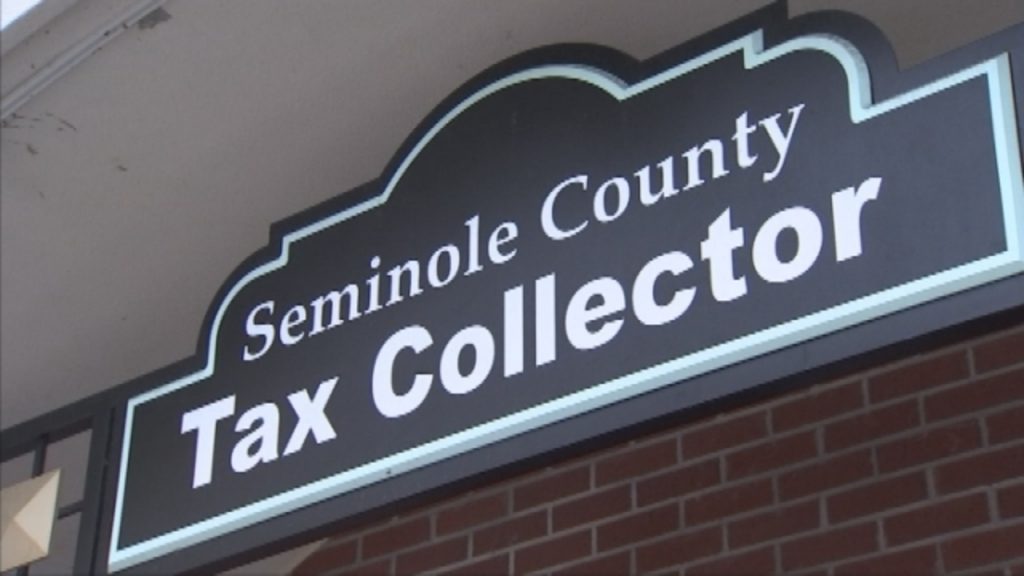
Popular crypto payment processor, Bitpay, announced formal agreement with Florida’s Seminole County Tax Collector, Joel M. Greenberg. Bitcoin core (BTC) and bitcoin cash (BCH) can now both be used for tax payments, beginning this summer. County residents can pay in crypto for driver licenses, ID cards, and even property taxes.

Bitpay Allows Enthusiasts in Seminole County, Florida to Pay Taxes in Crypto

File under: bitter sweet. Joel M. Greenberg, Seminole County Tax Collector, explained, “We live in a world where technology has made access to services on demand, with same-day delivery and the expectation of highly efficient customer service and we should expect the same from our government. The aim of my tenure in office is to make our customer experience faster, smarter, and more efficient, and to bring government services from the 18th century into the 21st century and one way is the addition of cryptocurrency to our payment options.”
Bitpay Enables Bitcoin Cash (BCH) and Bitcoin Core (BTC) for Tax Payments
Mr. Greenberg
Cryptocurrency isn’t necessarily moral nor immoral. It is an amoral technology, a tool. It can be used for terrorism, vacation getaways, housing, and, now, taxes. As governments are wont, they’re usually immune from innovation. But when it comes to revenue collection they’re surprisingly spry, alert, on it. Paying taxes by credit or debit has been a thing for a while, but always involved processors taking a heavy cut. The advent of crypto and the Bitpay Visa does away with a great many previous frictions, making the expropriation experience win-win: enthusiasts don’t have to do yet another conversion, and governments save in fees.

Holding Noses, Simplified

Head of Compliance at Bitpay, Jeremie Beaudry, detailed, “Bitpay was started because we recognized the potential for blockchain to revolutionize the financial industry, making payments faster, more secure, and less expensive on a global scale. With the Seminole County Tax Collector’s office, we have engaged our first government agency to accept bitcoin and bitcoin cash by making it easy and seamless for them.”
Bitpay Enables Bitcoin Cash (BCH) and Bitcoin Core (BTC) for Tax Payments
And though the broader crypto community has its issues with funding governments, making paying them shouldn’t be any more cumbersome than need be. Bitpay and Seminole County teamed to allow bitcoin cash and bitcoin core for pretty much everything: car tags and titles, licenses, even property tax.
The county tax collector gets their money settled by the following business day, paid directly to the account in fiat. The local government is spared notorious price volatility and the usual risk associated with crypto. As Bitpay’s press release insists, through a “push transaction, the user sends the exact amount of bitcoin or bitcoin cash needed to pay the bill. This eliminates traditional credit card fraud and identity theft risks associated with credit cards.” The company’s fees are also better than merely competitive, as 1% per approval is way below market rate. And for those wishing to pay their taxes, the processor can be accessed through traditional computers or smartphones.
Is the ability to pay taxes with crypto a good way to increase overall adoption? Let us know what you think about this subject in the comments below.

Images via Shutterstock, Pixabay, Bitpay.
Read More
  • Share This:  
  •  Facebook
  •  Twitter
  •  Google+
  •  Stumble
  •  Digg

Bitcoin in Brief Tuesday: NY Regulator Approves Bitcoin Cash, Zcash and Litecoin Trading

 May 15, 2018     No comments   

Bitcoin in Brief Tuesday: NY Regulator Approves Bitcoin Cash, Zcash and Litecoin Trading

The slow but steady growth in the limited trading options available to American investors on regulated exchanges is the main focus of today’s edition of Bitcoin in Brief. Additionally covered are a surprise resignation, another ransomware attack, and much more.

NYDFS Approves Expanded Crypto Portfolio

New York State Department of Financial Services Superintendent Maria T. Vullo has announced on Monday that Gemini Trust Company LLC has been authorized to offer the custody services and trading of Zcash, Litecoin and Bitcoin Cash on its exchange based in NYC. She said: “This action continues New York’s longstanding commitment to innovation and leadership in the global marketplace. With smart and thorough regulatory oversight, the development and long-term growth of the industry will remain thriving.”
The addition of Zcash especially seems to have taken the market by surprise, leading to its price jumping over 40% in the last twenty-four hours. Back in March, the founders of the trading venue revealed that adding new cryptocurrency options are high on the company’s agenda this year, with BCH and LTC at the top of the list. Tyler Winklevoss, CEO of Gemini, commented on Monday: “We are proud to be the first licensed exchange in the world to offer Zcash trading and custody services and look forward to providing customers with a safe, secure, and regulated place to buy, sell, and store Zcash, an incredible new form of digital cash.”

Surprise CEO Resignation

Okex Rolls Back Futures Contracts After Liquidations Leave Traders ReelingChris Lee, Chief Executive Officer at Chinese-run cryptocurrency exchange Okex, has reportedly left his position with the Hong Kong based company. Lee cited personal reasons for his departure, seeking to “start a new life,” the exchange stated on Monday. According to his spokeswoman, Lee added it had been the “greatest pleasure and an honor” to work at Okex and that he will return to the blockchain community after a short break to spend time with his family. The surprising move raised some speculations online as for the reasons.

$1 Million Bitcoin Heist Foiled

According to media reports from the state of Georgia, the Forsyth County Sheriff’s Office found that five young men had conspired to break into a local home and steal nearly $1 million in bitcoin. Their robbery investigation has reportedly been ongoing since January, following a drug bust. The five young men, Justin Ellison, Trivette Adams, Matthew Schwartz, Jacob South, and Michael McDermont, have been charged with residential strong arm robbery and are being held in a detention center without bond.

Australian Sexual Health Provider Held for Ransom

Bitcoin in Brief Tuesday: NY Regulator Approves Bitcoin Cash, Zcash and Litecoin TradingFamily Planning New South Wales, one of Australia’s largest reproductive and sexual health service providers, has sent out an email to its clients on Monday notifying them that it reported a cyber attack on its website to Australian Federal Police.

“I want to stress to people that this has absolutely nothing to do with, and has no impact on our clinical medical records, they’ve always been secure,” the organization’s chief executive Ann Brassil said at a press conference on Monday. “There’s no evidence that this cyberattack was on Family Planning NSW itself;…and it appears it was an attack for ransom, so it was financial. The ransom said we are shutting down your website and you pay us $15,000 in Bitcoin for us to release the website, and it had a clock ticking down.”

Polish Propaganda

Polish financial authorities have again been found to spend taxpayers’ money on a smear campaign on social media against investing in cryptocurrencies. Poland’s Financial Supervision Authority (KNF) has issued a new tender order to plan and conduct a campaign aimed at “building awareness” among the public for the risks associated with investing in cryptocurrencies, pyramid schemes and forex activities unsupervised by the KNF.
Earlier this year it was reveled that the Central Bank of Poland and KNF had paid over 90,000 PLN (zÅ‚oty) to, among others, a Polish Youtube content network which represents many popular young local content creators to produce anti-crypto videos.
What do you think about today’s news updates? Share your thoughts in the comments section below. 

Images courtesy of Shutterstock.

Read More
  • Share This:  
  •  Facebook
  •  Twitter
  •  Google+
  •  Stumble
  •  Digg

Chinese Miners Are Finding Relocation Difficult in Southeast Asia

 May 15, 2018     1 comment   

Chinese Miners Who Relocate Are Finding Other Regions Located in Southeast Asia More Difficult

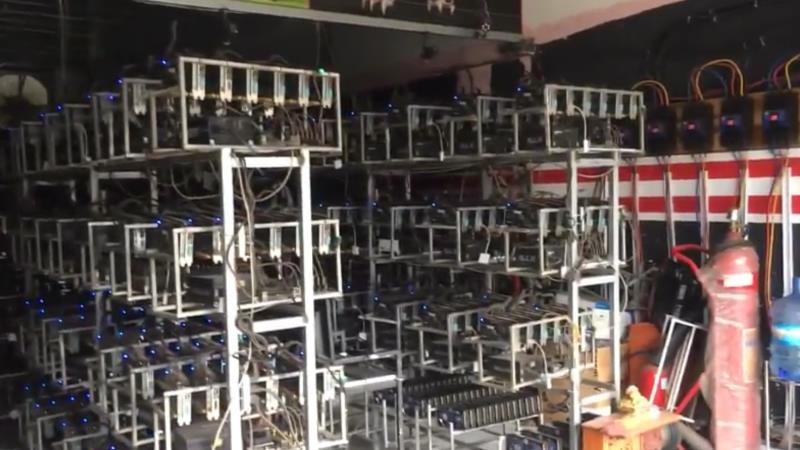
Mining in China is still allowed but there have been rumors of government crackdowns, and because of this speculation many mining operations based in the country have begun to relocate. Some operations who still seek out cheaper Chinese electricity tariffs moved to the border towns in Yunnan, but lots of Chinese minershave relocated to other areas in Southeast Asia like South Korea, Vietnam, Cambodia, and Myanmar. Although government officials and residents living in these regions have been giving miners a hard time according to a relocated miner named Zhang Han.
Chinese Miners Are Finding Relocation Difficult in Southeast Asia
Zhang relocated to Cambodia from China and found that local rent is quite cheap, a 500 square-meter large shack only charges 500,000 riel ($100) per month, and you can hire two local young labors at the cost of only $100. But Cambodian mining operations have posed other problems for Chinese miners.
Zhang says that he had miner friends that already “occupied” the suburbs of Cambodia and Myanmar. He did the math and found areas in Southeast Asia still offer much cheaper electricity than other countries worldwide. However, the miner explains he is not too happy with the move and states “I really regret it.” At first, Zhang found that Cambodia was expensive in some areas of operations, but less expensive in other areas when compared to other regions.   
“Compared with other miners who choose Vietnam and Myanmar, the electricity in Cambodia is slightly more expensive, but it costs less in other expenses,” Zhang explains in his recent interview.
It costs almost the same in Cambodia as industrial electricity price in China, 1.3 yuan ($20 cents) per kilowatt-hour (kWh), but you can take advantage of electricity theft from streetlamp facility with the help of some insiders.
Chinese Miners Are Finding Relocation Difficult in Southeast Asia
Accessory costs and maintenance is much more expensive than China. Some things can be 3X the price says Zhang.

Accessories Costs and Operations Maintenance is More Expensive Abroad for Relocated Chinese Miners

The accessories costs and operations maintenance is what gave his mining operation headaches, Zhang explains. “Maintenance and accessories are very big problems, and it can also be said that the cost of supplies is very high,” Zhang details. “But hardware maintenance is a challenge, it would cost you a great sum – at least 3 times higher than the cost back in China, especially in hot days when entering March. Buying parts here is really a big headache, we have no choice but to purchase them from China, which would take days or even weeks to have it available in operation here.”
At times we turn to local miners for help, while they would seize the opportunity to ask for unfairly high price for a tiny fitting. 
Chinese Miners Are Finding Relocation Difficult in Southeast Asia
Many areas in Southeast Asia experience lots of power outages and Zhang’s operation deals with electrical outages frequently. However, Zhang says you can take advantage of electricity theft from streetlamp facility with the help of some “insiders.”

Chinese Miners Also Face Unfriendly Local Competitors and Residents Who Might Report Electrical Theft

Zhang further realized that Cambodia suffered from significant power outages where there is no electricity for a whole day or even longer. The miner says in order to mitigate the problem, if an operation happens to have a connection with a power company “insider,” they can steal power from a nearby streetlight. However, local residents may report this method to the authorities, and Zhang says residents are not too friendly towards Chinese miners right now. Additionally, local miners and financial institutions backed by Western countries are also not pleased with Chinese miners relocating to these countries.
“Apart from the local residents and miners, institutions funded by western countries are also unfriendly to us — They are all trying to squeeze us out of here — And I’m considering that,” Zhang concludes.
What do you think about relocated Chinese miners having issues in other areas of Southeast Asia? Let us know your thoughts on this subject in the comments below. 

Images via Shutterstock, and SOHO.com

Read More
  • Share This:  
  •  Facebook
  •  Twitter
  •  Google+
  •  Stumble
  •  Digg

Monday, May 14, 2018

Bitcoin Could Hit $64,000 in 2019: Fundstrat

 May 14, 2018     No comments   

Bitcoin Could Hit $64,000 in 2019: Fundstrat
By Nathan Reiff | May 14, 2018 
When it comes to predictions about digital currencies like bitcoin (BTC), investors often turn to experts in the field. Tom Lee, the co-founder of Fundstrat Global Advisors and a longtime bitcoin advocate, fits that bill nicely. Now, Lee's team of financial researchers has revealed a dramatically bullish prediction for the price of the world's leading digital currency by market cap. Fundstrat's Sam Doctor wrote late last week that the price of one BTC could climb to at least $20,000 and might soar as high as $64,000 sometime in 2019.

Prediction Related to Mining

Fundstrat's bullish call is related to the process of mining bitcoin as the cryptocurrency approaches its maximum supply of 21 million coins, according to newsbtc.com. The team believes that the cost of mining a single bitcoin has proved to be a solid support in the past; as the difficulty of mining increases while we approach the last bitcoin's to be mined, this level of strong support will also increase. Bitcoin recently passed the landmark of 17 million coins in supply, meaning that miners are getting relatively close to the pre-set maximum circulation.
Fundstrat's note suggested that "bitcoin miners verify and process transactions, supporting the network in exchange for mining rewards and transaction fees ... we argue that the Price/Miner's Breakeven Cost multiple has proven a reliable long-term support level, and further, that the likely trajectory of future mining infrastructure growth should underpin bitcoin price appreciation into year-end 2019."

Lee Also Predicted a Rally

Just days before Doctor's note, Tom Lee himself predicted a short-term rally for bitcoin. Lee believes that the annual Consensus conference set to take place this week could prompt gains that would place the coin above $10,000.
The 2018 Consensus conference will take place in Manhattan from May 14 to 16, and roughly 7,000 cryptocurrency proponents will be in attendance. Lee suggested that the previous four Consensus events have all pushed the price of BTC up by anywhere from 10% to 70%. Given that Lee believes the price of BTC heading into the conference is down anyway, the rally might be even more potent.

Investing in cryptocurrencies and Initial Coin Offerings ("ICOs") is highly risky and speculative, and this article is not a recommendation by Investopedia or the writer to invest in cryptocurrencies or ICOs. Since each individual's situation is unique, a qualified professional should always be consulted before making any financial decisions. Investopedia makes no representations or warranties as to the accuracy or timeliness of the information contained herein. As of the date this article was written, the author owns bitcoin and ripple.


Read More
  • Share This:  
  •  Facebook
  •  Twitter
  •  Google+
  •  Stumble
  •  Digg

Bitcoin in Brief Monday: Belgium Expands List of Fraudulent Crypto Platforms, Plot to Kill Vinnik Uncovered in Greece

 May 14, 2018     No comments   

Bitcoin in Brief Monday: Belgium Expands List of Fraudulent Crypto Platforms, Plot to Kill Vinnik Uncovered in Greece
In Monday’s Bitcoin in Brief, Belgium’s financial watchdog, which earlier this year published a warning about potentially fraudulent platforms promising fast and easy profits to crypto investors, has just expanded its blacklist. In Russia, reports have surfaced of a plot to assassinate Alexander Vinnik in Greece, where he fights an extradition request from US authorities accusing him of laundering billions of dollars, including funds from the hacked Mt. Gox. Elsewhere, Australia allocates budget for blockchain research, and Dubai-based exchange Bitoasis suspends dirham withdrawals.

Belgium Expands List of Fraudulent Crypto Platforms

Belgium’s Financial Services and Markets Authority has expanded its list of unauthorized and potentially fraudulent crypto companies operating in the country. The financial watchdog has recently published a new warning noting that “the FSMA is receiving an increasing number of consumer complaints regarding investments in cryptocurrencies [and] once again warns the public about these platforms, often operated by fraudsters who are now resorting to cryptocurrencies to swindle consumers.” The regulator also said that people who have invested through these platforms often complain they never recover their funds.
Bitcoin in Brief Monday: Belgium Expands List of Fraudulent Crypto Platforms, Plot to Kill Vinnik Uncovered in Greece
In March, the FSMA published its first list of 19 suspicious crypto platforms saying it had received “questions or complaints from consumers and has established indications of fraud,” as news.Bitcoin.com reported. The agency stressed that the compilation does not include all questionable crypto trading platforms, but only those whose fraudulent practices have been reported by consumers. Last week the Belgian financial authority reminded investors that these companies usually claim to offer the best trading platforms for both beginners and professionals.

Plot to Assassinate Vinnik Uncovered in Greece

Law enforcement authorities in Greece have reportedly uncovered a plot to kill Alexander Vinnik in jail. The Russian national was detained in Greece at the request of the United States on suspicions of money laundering in connection with the Mt. Gox hack. “Greek law enforcement received intelligence on plans to prepare an assassination via poisoning with the help of criminals. The head of the prison and the prosecutor of the city of Thessaloniki have summoned Vinnik and informed him about the plot. Special security measures were taken in connection with that,” a source familiar with the details told Sputnik.
Bitcoin in Brief Monday: Belgium Expands List of Fraudulent Crypto Platforms, Plot to Kill Vinnik Uncovered in GreeceAccording to the report, Vinnik is not allowed to accept any items, including food or beverages, from people he doesn’t know. His contacts with other inmates have been limited and measures have been taken to improve his personal security. Greek police received information about the murder plot earlier this year but it was not made public in order to help the investigation. The presumed murder attempt is said to be linked to the criminal underground and not the special services of any country. According to the quoted source, the assassination has been ordered by someone in Russia. Vinnik has recently expressed readiness to testify to Russian authorities for fintech-related crimes in his home country.


Alexander Vinnik was arrested in Greece in July last year at the request of authorities in the US, where he is suspected of laundering between $4 and $9 billion dollars through the now defunct cryptocurrency exchange BTC-e, including funds obtained from the notoriously hacked bitcoin exchange Mt. Gox. Russia has also asked for his extradition on other charges and Vinnik himself prefers to cooperate with law enforcement agencies in Moscow. The Russian IT specialist has also filed a petition for political asylum in Greece hoping to avoid extradition to the United States.

Australia to Finance Blockchain Research Through Budget

Australian authorities intend to finance the research of blockchain technologies through the federal budget for 2018/2019. According to the annual budget report, the government will provide additional $0.7 million AUD (>$0.5 million USD) for the Digital Transformation Agency (DTA) which will be tasked to investigate areas where blockchain technology could offer the most value for government services. The agency is expected to use the funds to conduct “research to determine the current maturity of blockchain, assess the readiness for government to adopt the technology, and identify problems that blockchain might be able to solve,” and also, to “understand the potential of using blockchain to support government services.”
Bitcoin in Brief Monday: Belgium Expands List of Fraudulent Crypto Platforms, Plot to Kill Vinnik Uncovered in Greece
Set up in 2015, DTA aims to facilitate the digitization of the Australian government. The agency has received a total of $92.4 million AUD (almost $70 million USD) in this year’s budget. That means the funds allocated for blockchain research are less than 1%. Nevertheless, the country has already recognized cryptocurrencies like bitcoin and passed legislation that treats cryptos like fiat money in the context of anti-money laundering and counter-terrorism financing policies. In April, Australia introduced regulations for cryptocurrency exchanges. The country’s financial regulator, the Australian Securities and Investments Commission, has taken measures against “deceptive and misleading initial coin offerings.”

Dubai Exchange Bitoasis Suspends Dirham Withdrawals

Bitcoin in Brief Monday: Belgium Expands List of Fraudulent Crypto Platforms, Plot to Kill Vinnik Uncovered in GreeceDubai-based cryptocurrency exchange Bitoasis has announced a temporary suspension of deposits and withdrawals in UAE dirhams. The trading platform warned its customers that if they want to access their dirham balances or deposit dirhams into in their accounts via wire transfers they will have to initiate an order no later than Tuesday, May 15. Such transactions will not be processed after that date. According to the notice sent to account holders, credit card deposits will be possible until June 16.
In the letter, quoted by Arabian Business, Bitoasis claims the restrictions were imposed due to issues with the bank it works with. Other means of buying and selling cryptocurrencies on the platform, as well as digital coin withdrawals to other wallets, are not affected, the exchange noted. “If you decide to leave your fiat balances, the only way for you to withdraw your funds at any time after May 15 would be to convert them to cryptocurrency and send them to an external wallet,” the statement reads. Bitoasis warns clients that it cannot provide a specific date for reactivating AED fiat withdrawals.
What are your thoughts on today’s Bitcoin in Brief stories? Tells in the comments section below.   

Images courtesy of Shutterstock.
Read More
  • Share This:  
  •  Facebook
  •  Twitter
  •  Google+
  •  Stumble
  •  Digg
Newer Posts Older Posts Home

Translate

Popular Posts

  • US Justice Department Investigates Price Manipulation in Bitcoin Market
    US Justice Department Investigates Price Manipulation in Bitcoin Market Have you ever felt that someone is controlling the crypto marke...
  • Top Altcoin Markets of 2015 Gain 10,000% in 3 Years
    Top Altcoin Markets of 2015 Gain 10,000% in 3 Years With the bear trend of early 2018 having witnessed losses not seen in the cryptocur...

Recent Posts

Categories

  • bitcoin china news (1)
  • Bitcoin India News (1)
  • bitcoin ki jankari (1)
  • bitcoin news (3)
  • blockchain (1)
  • create own crypto (1)
  • paper wallet (1)
  • RBI Cryptocurrency News (1)

Unordered List

Pages

  • Home

Text Widget

Blog Archive

  • May 2018 (73)

Search This Blog

Powered by Blogger.

Search This Blog

Report Abuse

About Me

Unknown
View my complete profile

US Justice Department Investigates Price Manipulation in Bitcoin Market

US Justice Department Investigates Price Manipulation in Bitcoin Market Have you ever felt that someone is controlling the crypto marke...

help yourself section

  • Warren Buffett on bitcoin: It doesn't produce anything except more buyers looking to sell
    Warren Buffett on bitcoin: It doesn't produce anything except more buyers looking to sell Fred Imbert |  @foimbert Published 1 H...
  • Pineapple Fund Writes Farewell Post, Reports That All Funds Have Been Donated
    Pineapple Fund Writes Farewell Post, Reports That All Funds Have Been Donated 5814 Total views 145 Total shares Pineapple Fu...
  • US Justice Department Investigates Price Manipulation in Bitcoin Market
    US Justice Department Investigates Price Manipulation in Bitcoin Market Have you ever felt that someone is controlling the crypto marke...

Sample Text

Copyright © coinbizz | Powered by Blogger
Design by Ranveer | Blogger Theme by NewBloggerThemes.com